Interment of Ashes: Options, Costs and Rules
Interment of ashes means placing cremated remains in their final resting place, usually a cemetery plot or a niche in a columbarium wall. Placing an urn in a niche is also called inurnment. Published cemetery schedules put niches at about $1,000 to $4,000, with opening and engraving fees on top.
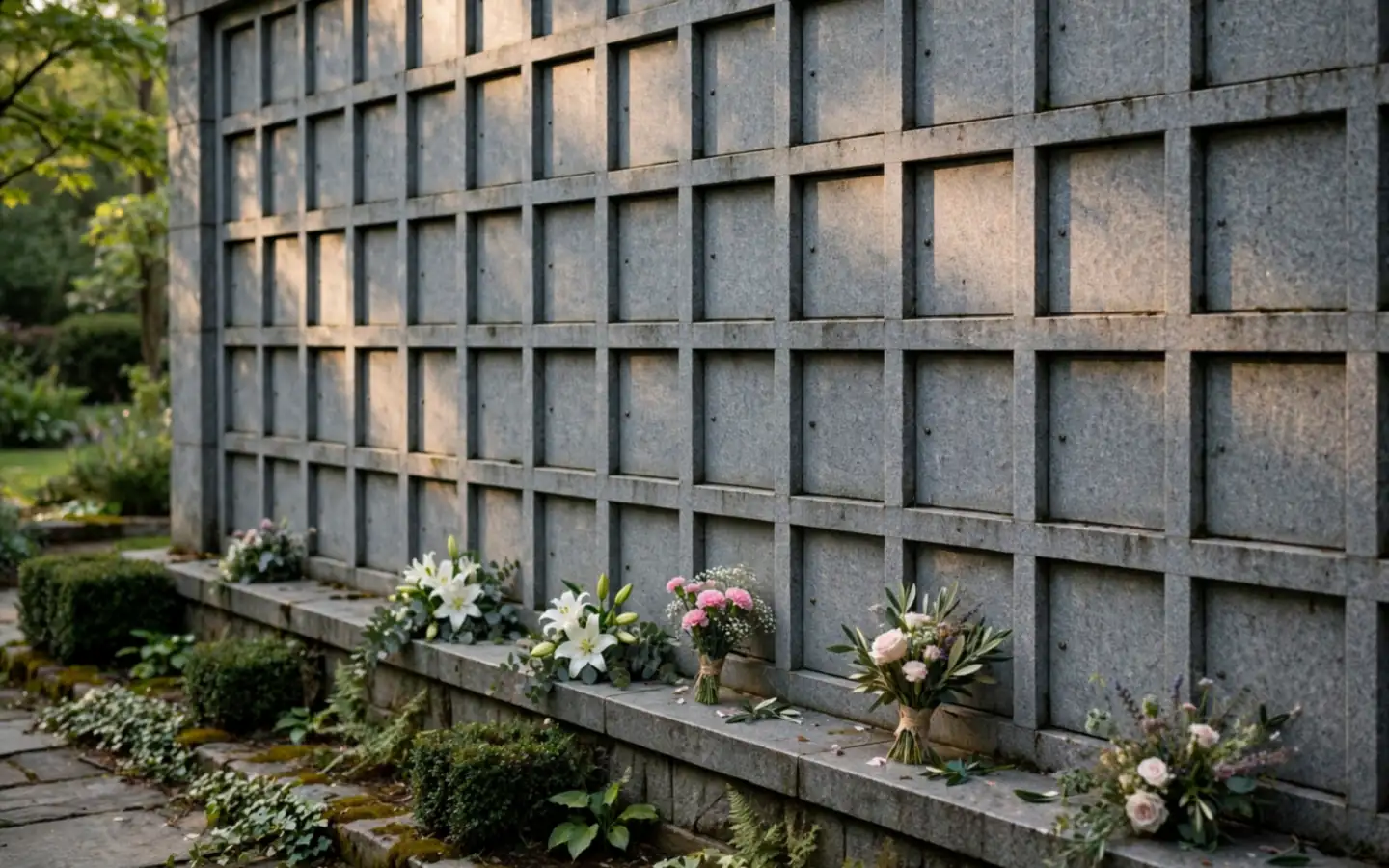
What interment means
Interment is the act or ceremony of burying a dead body, the definition the Cremation Association of North America uses in its glossary. The word covers ashes too. The interment of ashes is the moment the urn goes into its permanent place, a plot in the ground or a niche in a wall, usually with family present and a few words spoken.
A second word, inurnment, means placing an urn containing cremated remains into that niche or grave. Cemeteries use the two words almost interchangeably on price lists, so an “inurnment fee” on a schedule is the charge for opening the space and placing the urn.
If the ashes are still at home, the cremation process guide explains how they were prepared and returned. This guide covers what happens next.
Ways to inter ashes
- A cremation plot. A smaller grave dug for an urn, in a cemetery section set aside for cremated remains. Often the cheapest cemetery option.
- A standard grave. Most cemeteries allow urns in a full-size plot, and many allow two or more urns in one plot over time.
- A columbarium niche. A recess in a granite or marble wall, indoors or in a garden, sealed with an engraved front. This is the option most people picture for ashes.
- A family plot. Placing the urn in an existing family grave, if the cemetery’s rules and the plot’s remaining rights allow it.
- Natural ground. Green burial grounds accept urns, usually in a biodegradable container. The green burial cost guide covers those grounds and their prices.
What a cremation niche costs
Cemeteries set their own prices, and the honest figures are the ones on published schedules. These are real price lists we checked in October 2026:
| Cemetery (published schedule) | Niche price | Extra fees |
|---|---|---|
| Church of the Ascension, Rockville Centre, NY | $1,000 for 1 to 2 urns; family niche $2,250 | Nameplate and first placement included; later placements $250 |
| St Anthony Catholic Cemetery, Nanuet, NY | $2,050 to $2,580 | Per published schedule |
| St Andrew’s Episcopal Church, Glenwood, MD | $2,500 for a two-urn niche | Opening and engraving about $200 to $450 |
| Prairie Home Cemetery, Waukesha, WI (municipal) | $1,795 to $3,530 by level | Placement (inurnment) $855 |
| Cathedral of Hope, Dallas, TX | $3,600 (lower rows) to $4,200 (top rows) | Per published schedule |
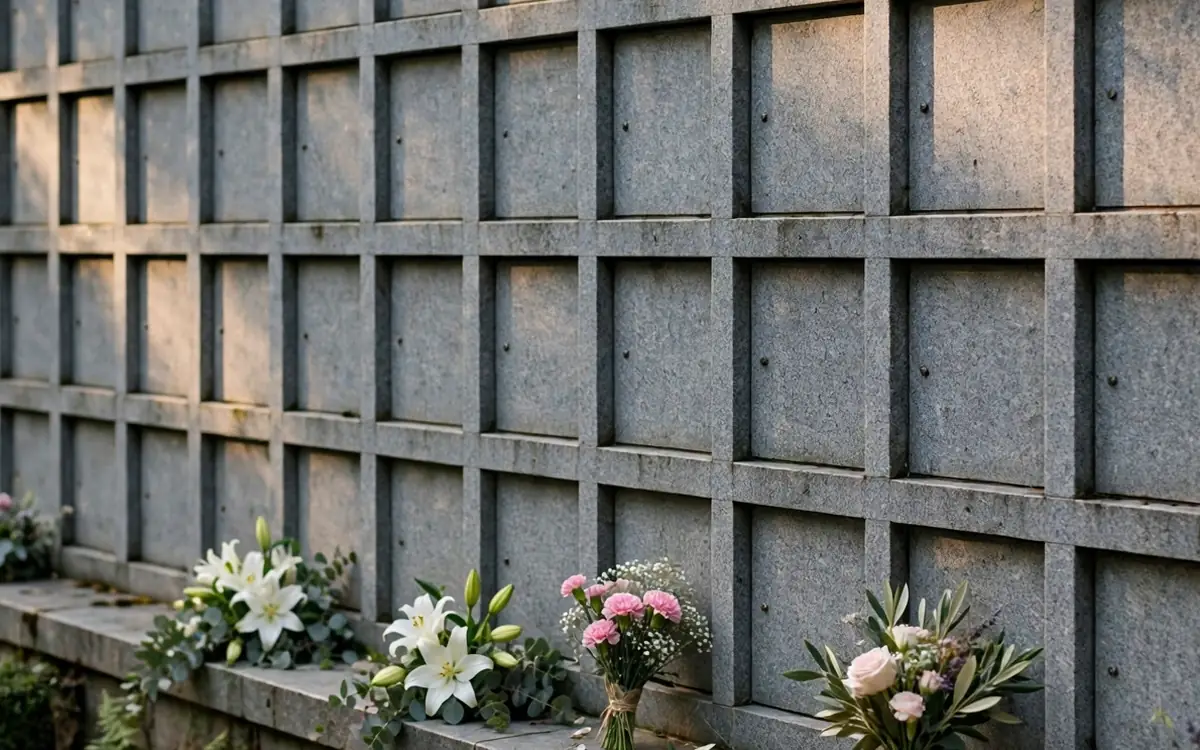
Read together, published schedules put a single niche anywhere from about $1,000 at a church columbarium to more than $4,000 at a premium garden wall, with height in the wall, material and city all moving the price. Always ask for the cemetery’s own schedule and the full fee list: niche, opening or placement, engraving, and any perpetual care charge.
The cost to bury cremated ashes
Burying an urn avoids the niche price but adds ground fees. The Funeral Consumers Alliance estimates the burial of cremated remains at a green burial ground at $200 to $1,000, and grave opening and closing at $300 to $1,000. A conventional cemetery works the same way: a cremation plot or a share of a standard plot, plus an opening and closing fee each time an urn is placed, plus an urn vault if the cemetery requires one. Total ground costs commonly land between a few hundred dollars and about $2,000 on top of the cremation itself. The cremation cost breakdown shows how that fits into the full bill.
What to say at the interment of ashes
The ceremony is usually short: the urn is placed, a few words are said, and family members may add flowers or a handful of earth. If you are leading it and the words will not come, these short examples are free to use or adapt:
- “We place [Name] here, in this quiet place, with love. What they gave us stays with us. Rest now; you are home.”
- “Ashes to ashes, dust to dust. We thank God for the life of [Name], for every year we were given, and we leave them in peace.”
- “This is not goodbye. It is where we will come to remember [Name], to talk to them, and to feel close. They are part of this place now, and part of us, always.”
Keep it under five minutes unless the family wants more. A favourite short poem or a verse the person loved works well after the words of placement, and children can be given a flower to lay down, which gives them a part in the moment.
Scattering ashes: the rules
Scattering avoids cemetery costs, but it is regulated in the places families choose most.
At sea
The Environmental Protection Agency allows burial at sea of cremated remains under a federal general permit (40 CFR 229.1). The remains must be scattered at least three nautical miles from land, in water of any depth. No permit or fee is needed in advance, but you must notify the EPA within 30 days afterwards, using its reporting tool or the regional office. Anything placed with the remains, such as flowers or a wreath, must be readily decomposable: no plastic or metal. The state the boat leaves from may have its own rules as well.
In a national park
Federal regulation 36 CFR 2.62(b) governs scattering in national parks, and each park runs its own process, so check with the park before you go. Yellowstone, for example, requires a free Special Use Permit applied for at least 10 business days ahead, with the ashes fully processed and dispersed in undeveloped areas away from roads, water and hot springs, and nothing left behind. Sequoia and Kings Canyon ask for no permit but set conditions: on foot, at least 100 yards from trails, roads, buildings and water, and no markers. Fees and rules differ by park, up to $120 at Joshua Tree, so the park’s own page is the authority.
On land, and flying with ashes
On private land, get the landowner’s permission first. Public land rules vary by state and by agency, and some states have no scattering law at all, which is why the safe advice is to check your state’s rules and the local land manager before choosing a spot. A place that matters to the family, visited over years, is better served by a legal scattering than a hurried one.
To fly with ashes, the TSA allows cremated remains in carry-on or checked bags. Carry them in a container of wood, plastic or another light material that X-rays clearly: officers will not open the container, even if you ask, but an opaque container cannot pass the checkpoint. Several airlines will not carry ashes in checked bags, so carry-on in a scan-friendly container is the reliable plan.
Frequently asked questions
What does interment of ashes mean?
It means placing cremated remains in a permanent resting place, usually burying the urn in a cemetery plot or placing it in a columbarium niche, often with a short ceremony. Interment is the general word for burying remains; placing an urn in a niche or grave is also called inurnment.
How much does a cremation niche cost?
Published cemetery schedules show single niches from about $1,000 to more than $4,000. A church columbarium in New York lists $1,000 including a nameplate and the first placement; a municipal cemetery in Wisconsin lists single niches at $1,795 to $3,530 plus an $855 placement fee. Opening, placement and engraving fees are often charged on top of the niche price.
What is the difference between interment and inurnment?
Interment is the act or ceremony of burying a body or remains, the definition used by the Cremation Association of North America. Inurnment is the specific word for placing an urn of cremated remains into a niche, a grave or another resting place. In practice, cemeteries use both words for the placement of ashes.
Can you bury cremated ashes in a normal grave?
Yes, most cemeteries allow an urn in a standard grave, and many let two or more urns share one plot, which makes a family plot go further. Expect a smaller cremation plot or the full plot price, plus an opening and closing fee each time an urn is placed. Some cemeteries also require an urn vault, a box that protects the urn underground.
Is it legal to scatter ashes in the ocean?
Yes, under a federal general permit described by the Environmental Protection Agency. Cremated remains must be scattered at least three nautical miles from land, no permit or fee is needed beforehand, and you must notify the EPA within 30 days afterwards. Flowers or wreaths placed with the remains must be decomposable, with no plastic.
Can I fly with cremated ashes?
Yes. The TSA allows cremated remains in carry-on and checked bags, and recommends a container of wood, plastic or another light material that X-rays clearly. Officers will not open the container, but if it shows as opaque on the scanner it cannot pass. Some airlines refuse ashes in checked bags, so confirm with your airline before you travel.